The Palace designation — awarded by the French Ministry of Tourism to fewer than 30 hotels in France — is the most demanding hotel classification in the world. In Paris, eight establishments hold it. This is what separates them.
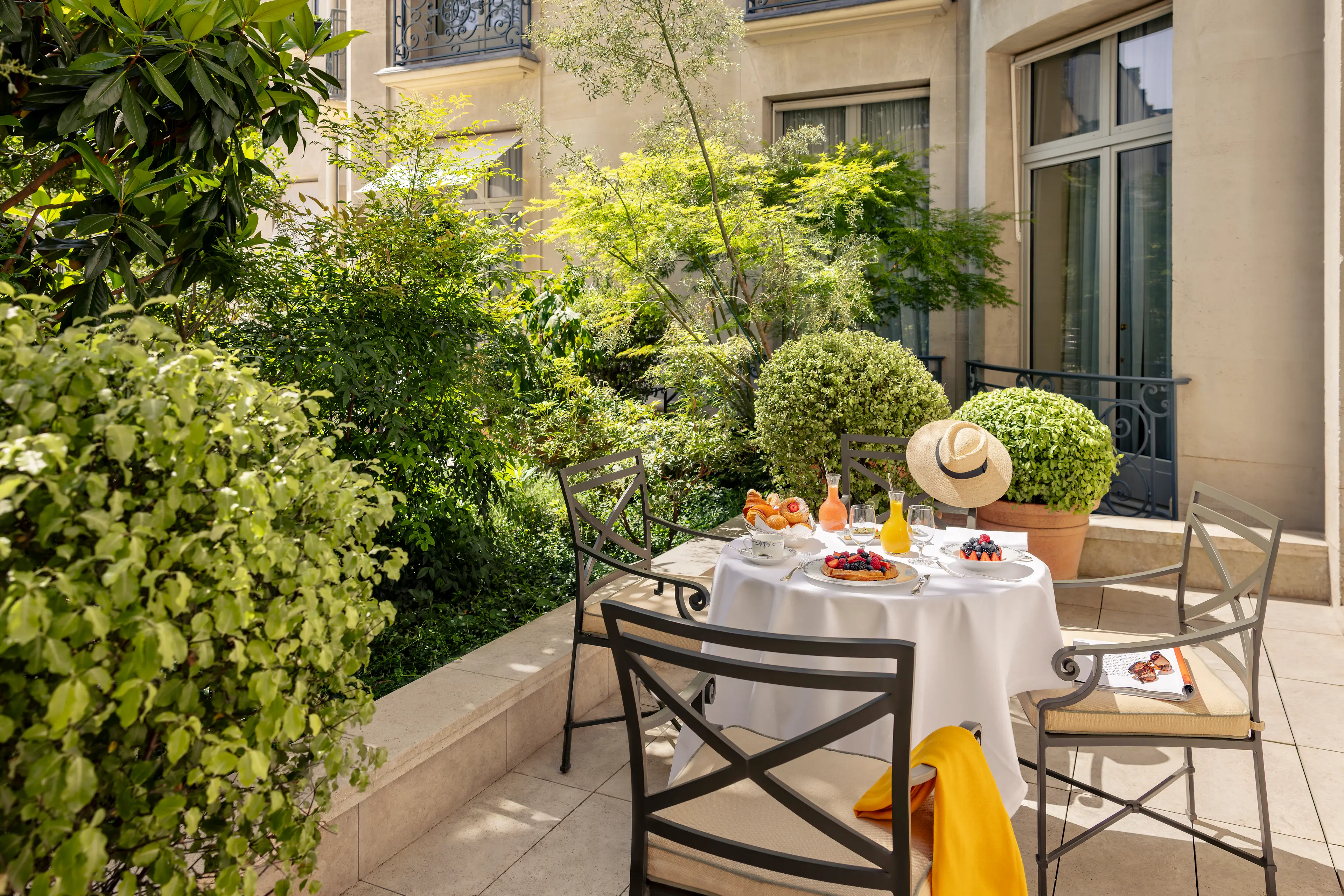
What the Palace Designation Actually Means
The Palace classification was introduced by the French government in 2010 to distinguish the country's finest hotels from the merely excellent. To qualify, a hotel must hold five stars, demonstrate exceptional architectural or historical significance, maintain a ratio of one staff member per room, offer 24-hour concierge and room service, provide a spa and fitness centre, and meet 200 specific criteria across service, facilities, and cultural engagement. The designation is reviewed every five years.
In Paris, eight hotels currently hold the Palace designation: the Ritz, the Bristol, the Crillon, the George V, the Meurice, the Plaza Athénée, the Shangri-La Paris, and the Peninsula Paris. Each represents a different philosophy of luxury, a different relationship with the city, and a different answer to the question of what a great hotel should be.
The Ritz: The Original and the Archetype
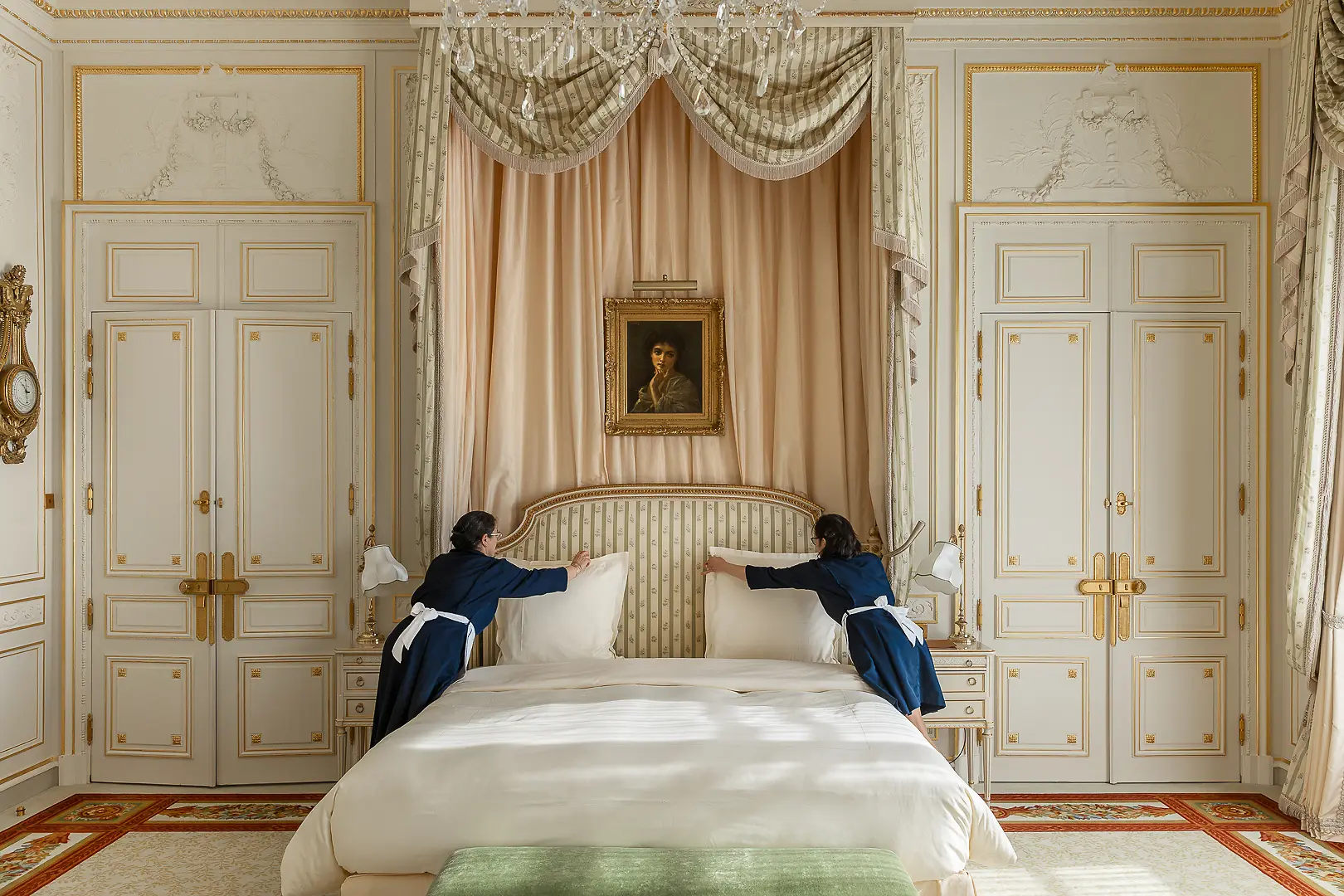
The Ritz Paris is not merely a hotel — it is the hotel that invented the concept of luxury hospitality as we understand it today. César Ritz opened the property on the Place Vendôme in 1898 with the radical proposition that wealthy guests deserved private bathrooms, electric lighting, and a level of service that anticipated their every need. The hotel that bears his name has been fulfilling that promise for 128 years.
The Ritz closed for four years of renovation between 2012 and 2016, emerging with its historical character intact and its facilities transformed. The Espadon restaurant, under chef Nicolas Sale, holds two Michelin stars. The Bar Hemingway — named for the novelist who claimed to have 'liberated' it from the Germans in 1944 — remains the most storied cocktail bar in the world. The Coco Chanel Suite, where the designer lived for 34 years, is the most requested accommodation in Paris.
Le Bristol: The Discreet Aristocrat
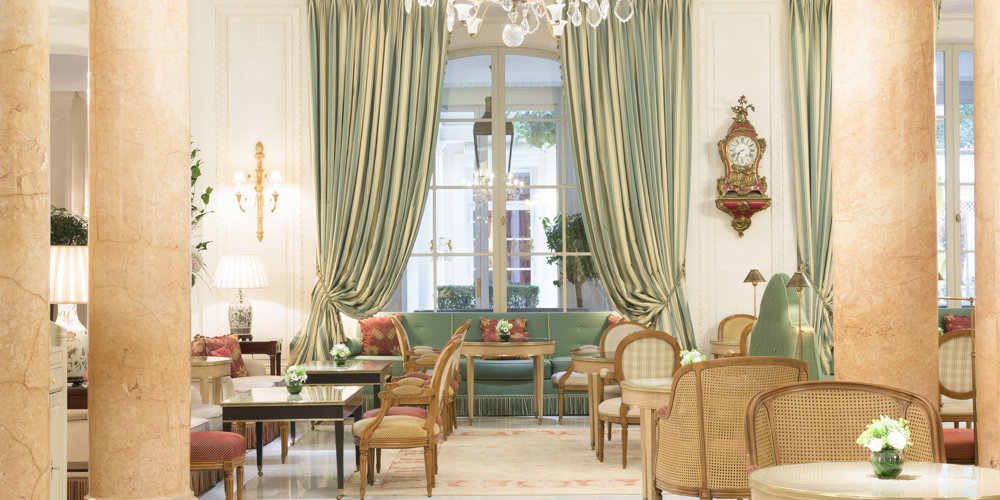
Le Bristol occupies a position in Parisian hotel culture that is entirely its own: the hotel of choice for guests who find the Ritz too theatrical and the George V too corporate. Located on the Rue du Faubourg Saint-Honoré, steps from the Élysée Palace, it has been the preferred address of French presidents, foreign dignitaries, and the kind of old-money European families who regard conspicuous luxury with mild distaste.
The hotel's garden — a rarity in central Paris — is the finest outdoor space of any Palace hotel in the city. The Épicure restaurant, under chef Éric Frechon, holds three Michelin stars and is one of the most difficult reservations in France. The rooftop pool, open in summer, offers views of the Sacré-Cœur and the Eiffel Tower that are among the most beautiful in the city.
The George V: Where Art Meets Hospitality
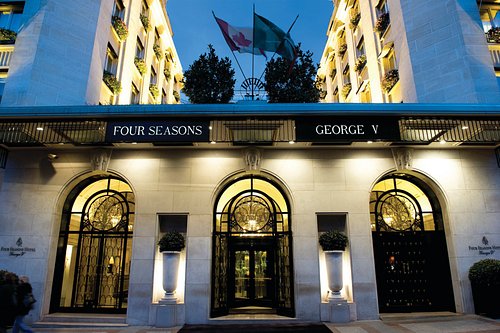
The Four Seasons George V is the most visually spectacular of the Paris Palace hotels — its lobby, decorated with extraordinary floral arrangements by Jeff Leatham, has been photographed more than any other hotel interior in the world. The hotel holds an unprecedented three Michelin-starred restaurants under one roof: Le Cinq (three stars), Le George (one star), and L'Orangerie (one star).
The George V's art collection, which includes Flemish tapestries, 17th-century paintings, and contemporary works, is among the finest in any hotel in the world. The spa, which opened in 2016, is the most comprehensive in Paris. And the hotel's position on the Avenue George V, a five-minute walk from the Arc de Triomphe and the Champs-Élysées, makes it the most conveniently located of the Palace hotels for first-time visitors to the city.
The Hôtel de Crillon: A Palace on the Place de la Concorde
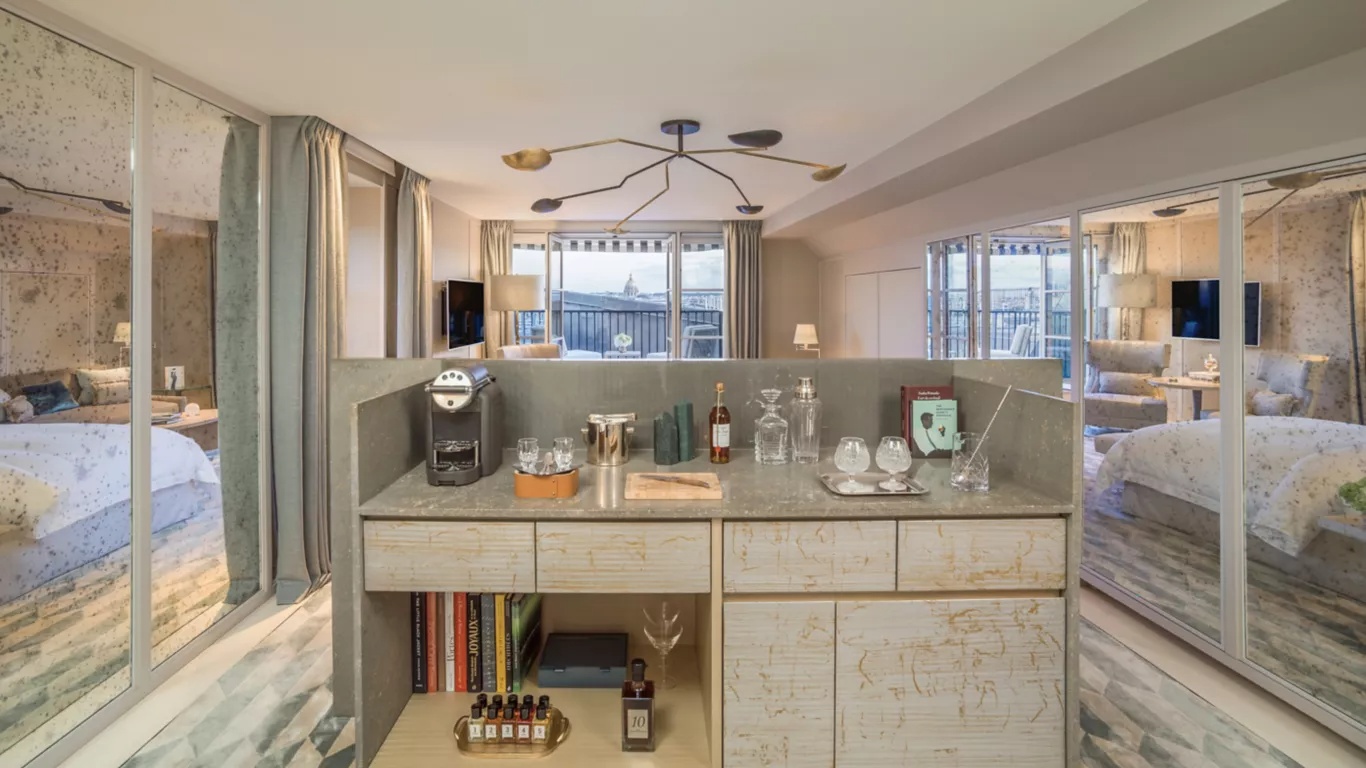
The Hôtel de Crillon occupies an 18th-century palace on the Place de la Concorde — one of the most historically significant buildings in France, designed by Ange-Jacques Gabriel for Louis XV and completed in 1758. The building has served as a royal residence, a revolutionary tribunal, and the seat of the American Embassy before becoming a hotel in 1909. It reopened in 2017 after a four-year renovation by Aline Asmar d'Amman, with interiors that balance the building's neoclassical grandeur with contemporary French design.
The Les Ambassadeurs bar — a soaring gilded room that was once a concert hall where Mozart performed at the age of seven — is the finest hotel bar in Paris. The Brasserie d'Aumont serves all-day French cuisine in a room of extraordinary beauty. The hotel's 124 rooms and suites, many overlooking the Place de la Concorde and the Tuileries, are among the most historically significant accommodations in the world.
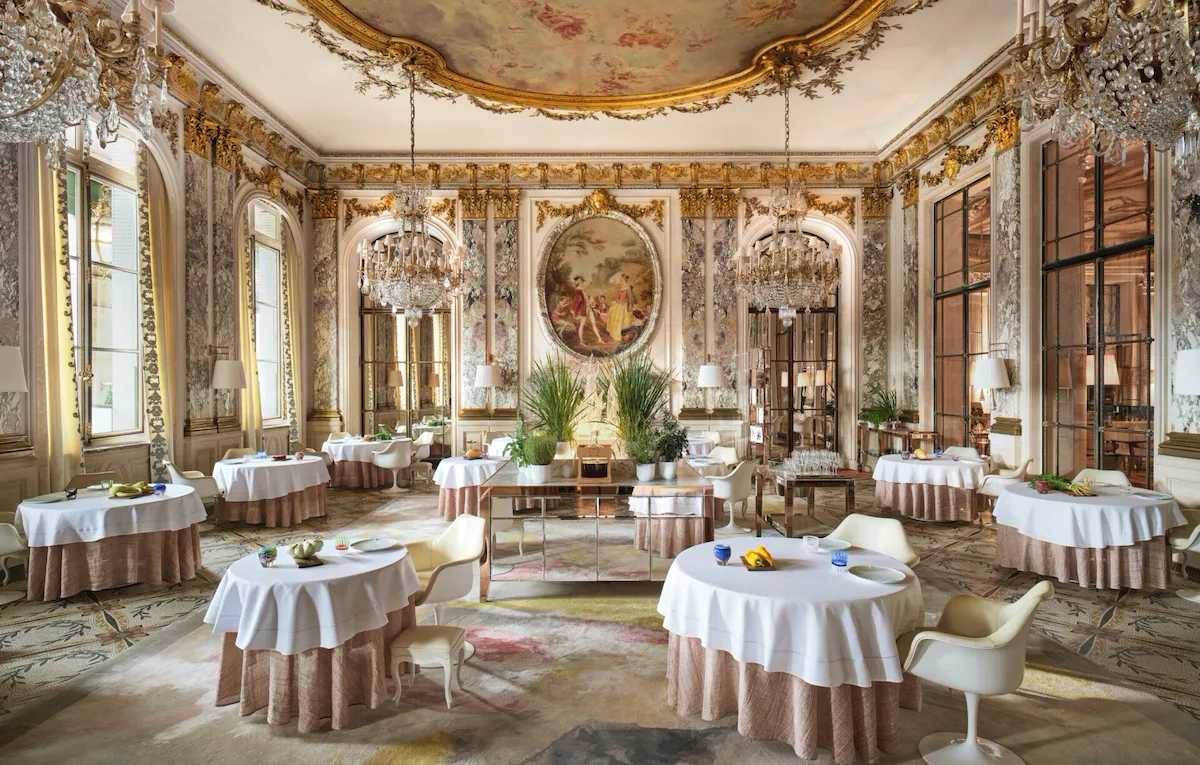
Le Meurice: The Palace of the Art World
Le Meurice, on the Rue de Rivoli overlooking the Tuileries, is the Palace hotel most beloved by the art world. Salvador Dalí lived here for 30 years, arriving each autumn with his ocelot and departing each spring — a tradition that gave the hotel its identity as a place where eccentricity and grandeur coexist. The hotel's relationship with contemporary art continues under the direction of the Dorchester Collection.
The Alain Ducasse au Meurice restaurant, with its extraordinary Versailles-inspired dining room, holds two Michelin stars and is one of the most beautiful dining rooms in the world. The hotel's position between the Louvre and the Place de la Concorde makes it the most culturally situated address in the city — within walking distance of the Musée d'Orsay, the Orangerie, and the Palais Royal.
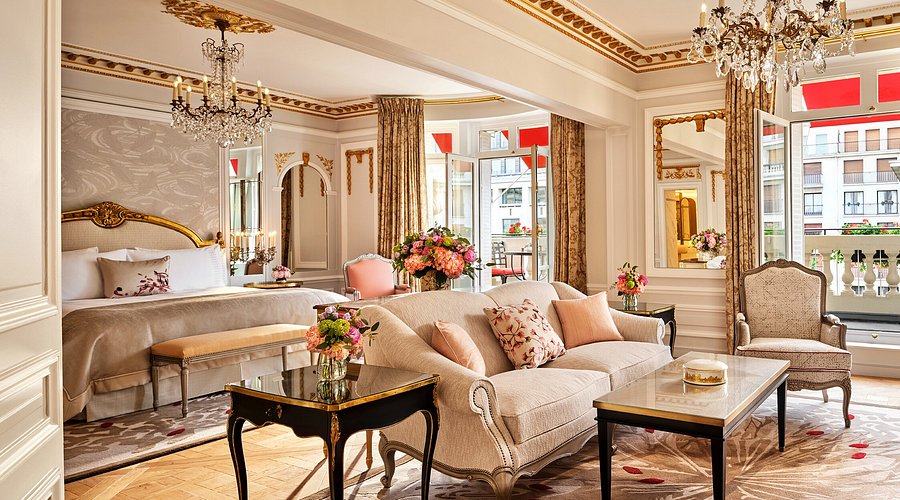
The Plaza Athénée: Fashion's Palace on Avenue Montaigne
The Plaza Athénée occupies a singular position in Parisian culture: it is the hotel of fashion, the address where the couture houses of Avenue Montaigne — Dior, Valentino, Chanel, Valentino — send their most important guests. The hotel's red geranium-draped façade on the Avenue Montaigne is one of the most photographed in Paris, and its position at the heart of the Golden Triangle makes it the natural base for anyone whose Paris is defined by fashion and luxury retail.
The Dior Institut at Plaza Athénée is the most celebrated hotel spa in Paris — a collaboration with the house of Dior that offers treatments using the brand's skincare formulations in an environment of extraordinary refinement. The Alain Ducasse au Plaza Athénée restaurant, which holds three Michelin stars, is one of the most ambitious in France: Ducasse's 'naturalité' philosophy — fish, vegetables, and grains, with meat absent from the menu — has made it one of the most discussed restaurants in the world.
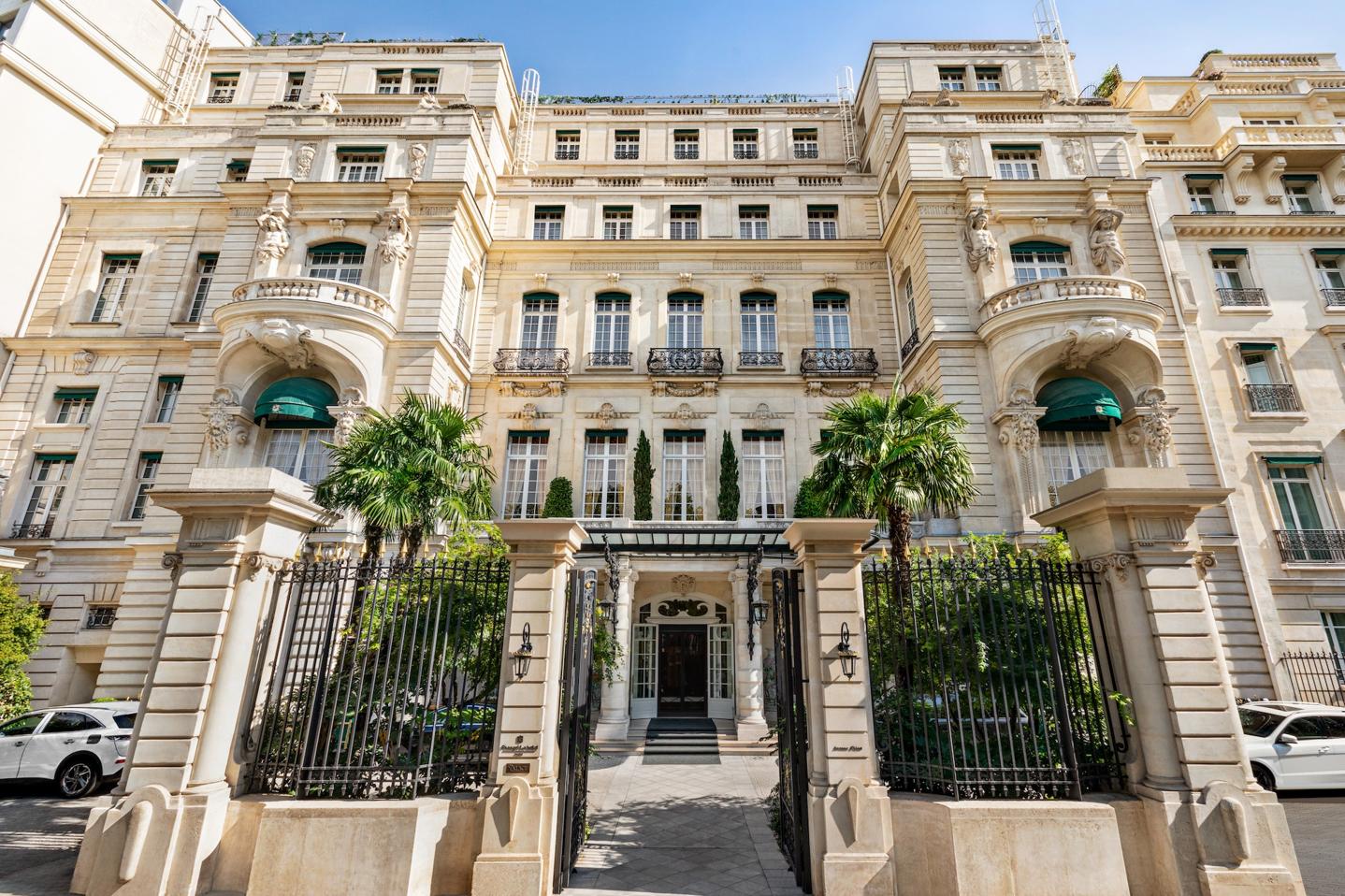
The Shangri-La Paris: Napoleon's Nephew's Palace
The Shangri-La Paris occupies the former private mansion of Prince Roland Bonaparte — nephew of Napoleon I — a building of extraordinary historical significance on the Avenue d'Iéna, steps from the Trocadéro. The hotel opened in 2010 after a meticulous restoration that preserved the mansion's original Napoleonic-era interiors while adding the discreet luxury of the Shangri-La group's signature Asian hospitality.
The hotel's most celebrated feature is its Eiffel Tower views: from the rooms and suites on the upper floors, from the terrace of the L'Abeille restaurant, and from the hotel's private garden, the tower is visible in a way that is unmatched by any other Palace hotel in Paris. L'Abeille holds one Michelin star; Shang Palace is the only Chinese restaurant in Paris to hold a Michelin star. The hotel's 101 rooms and suites are among the most spacious in the city, and the indoor pool — decorated with a mosaic of the Eiffel Tower — is the most beautiful in Paris.
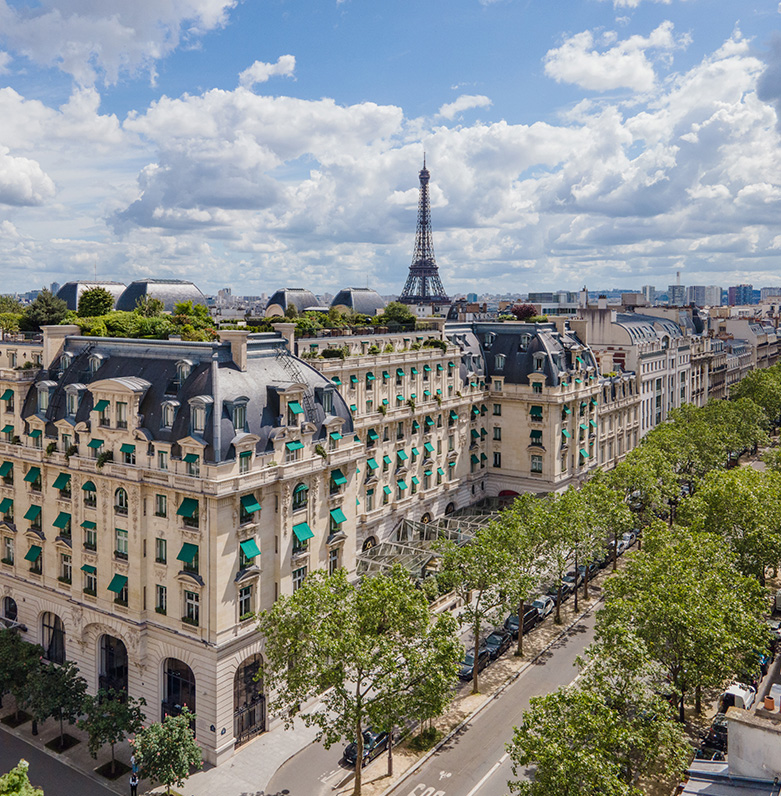
The Peninsula Paris: The Cosmopolitan Palace
The Peninsula Paris is the most cosmopolitan of the eight Palace hotels — a property that feels simultaneously rooted in French history and entirely of the present. The hotel occupies a century-old Haussmann building on Avenue Kléber, steps from the Arc de Triomphe, renovated in 2014 by architect Richard Martinet with interiors that blend Belle Époque grandeur with discreet contemporary technology.
The crowning glory is L'Oiseau Blanc, a glass-enclosed rooftop restaurant and bar with unobstructed views of the Eiffel Tower, the Sacré-Cœur, and the Arc de Triomphe — the finest rooftop dining room in Paris. The Lobby, where Gershwin composed 'An American in Paris' and Proust met Joyce, remains one of the great social rooms of the city. The hotel's 200 rooms are the most spacious of any Palace hotel in Paris, and the Peninsula Spa — with its indoor pool, hammam, and thermal suite — is among the most comprehensive in the city.
Our editors travel extensively to verify every recommendation. All hotel reviews are independent — we accept no payment for editorial coverage.