Masai Mara
Lions & balloon safaris
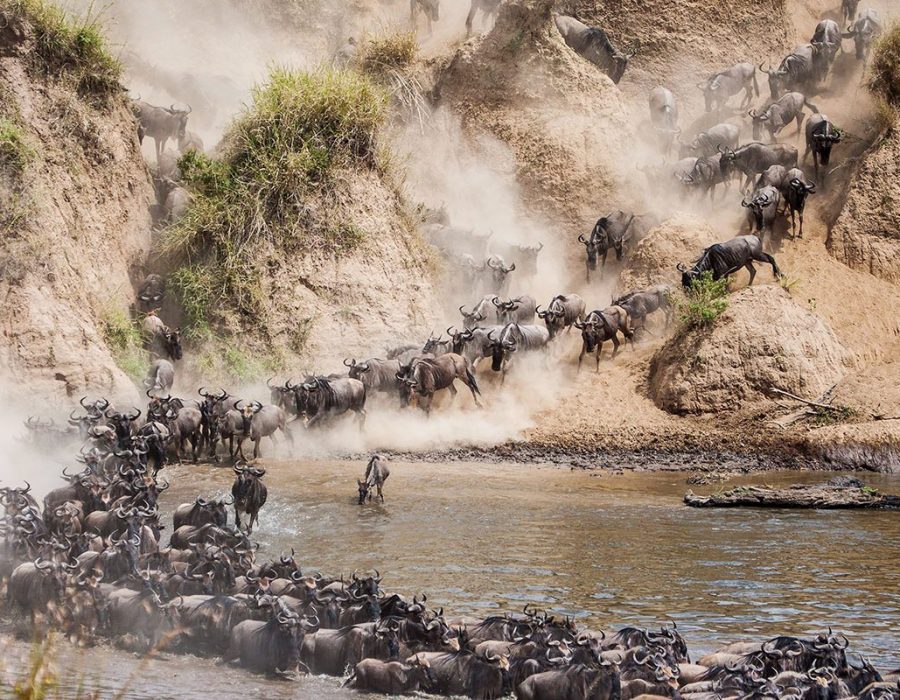
The Masai Mara is Kenya's most famous wildlife reserve — a 1,510-square-kilometre savannah in the south-west of the country that forms the northern extension of the Serengeti ecosystem. The Mara River, which bisects the reserve, is the site of the Great Migration's most dramatic crossing: between July and October, 1.5 million wildebeest plunge into the crocodile-infested water in a spectacle that has been filmed more often than any other wildlife event on earth.
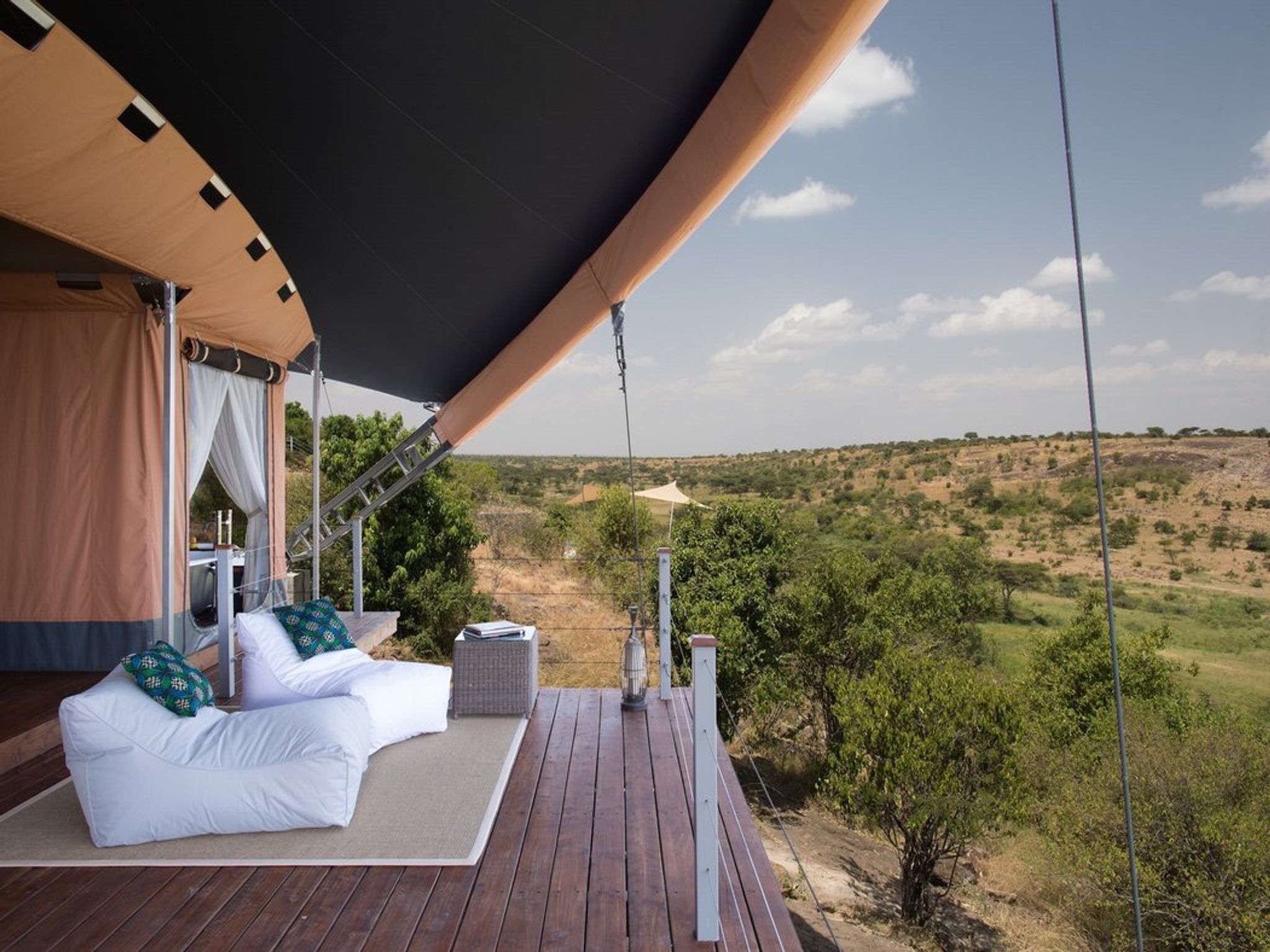
Angama Mara, perched on the edge of the Great Rift Valley escarpment above the Mara Triangle, is the most dramatically situated lodge in Kenya — two tented camps suspended 300 metres above the savannah, with views across the entire Mara ecosystem. It was the inspiration for the Out of Africa scene where Meryl Streep and Robert Redford have a picnic on a cliff. Mara Plains Camp, in the private Olare Motorogi Conservancy, is the most exclusive: a private concession with no other vehicles and the highest lion density in the Mara.
The Masai Mara's private conservancies — Olare Motorogi, Naboisho, Ol Kinyei, Mara North — are the most important development in Kenyan safari in a generation. By paying a conservancy fee directly to the Maasai landowners, guests access areas where no other vehicles are permitted, where night drives are allowed (not permitted in the national reserve), and where the game density is often higher than in the main reserve.
Balloon safaris at dawn are the defining Masai Mara experience — an hour above the savannah as the sun rises over the Rift Valley, followed by a champagne breakfast in the bush. Every lodge can arrange a balloon; book in advance as the baskets hold only 12 passengers and the experience is weather-dependent.
The private conservancies around the Mara — Olare Motorogi, Naboisho, Mara North — allow night drives and off-road driving, which the national reserve does not. For serious wildlife photography, a conservancy camp is significantly better than a national reserve camp.
The Great Migration crossing is unpredictable — the wildebeest cross when they choose, not when the calendar says. Stay at least three nights; five nights gives the best chance of witnessing a crossing.
Angama Mara's escarpment location means the views are extraordinary but the drive down to the game-viewing area takes 30–45 minutes. The views compensate entirely; but guests who want to maximise game-viewing time should choose a camp on the valley floor.
The Mara is accessible year-round, but the long rains (April–May) make some roads impassable. The short rains (November) are brief and rarely disruptive; the game-viewing is excellent and the prices are 20–30% lower than peak season.
July–October is the Masai Mara's peak season: the Great Migration crossing, the highest game density, and the best weather. January–March is the second-best period: dry, excellent predator activity, and significantly lower prices. April–May (long rains) is the only period to avoid; roads can be impassable and some camps close.
For the most dramatically situated lodge in Kenya, Angama Mara on the Great Rift Valley escarpment — 300 metres above the savannah with views across the entire Mara ecosystem — is the most extraordinary hotel address in the Masai Mara.
For the most exclusive game-viewing with no other vehicles, Mara Plains Camp in the private Olare Motorogi Conservancy offers the highest lion density in the Mara and the most private safari experience in Kenya.
For the most historically significant and characterful lodge, Cottar's 1920s Camp — a meticulously restored 1920s-style safari camp with antique furnishings and a private conservancy — is the most atmospheric address in the Mara.
For the best value in the luxury tier with a private conservancy location, Sanctuary Olonana on the Mara River offers excellent game-viewing, night drives, and a more accessible price point than the top-tier private camps.