San Miguel de Allende
Mexico's Most Beautiful Colonial City
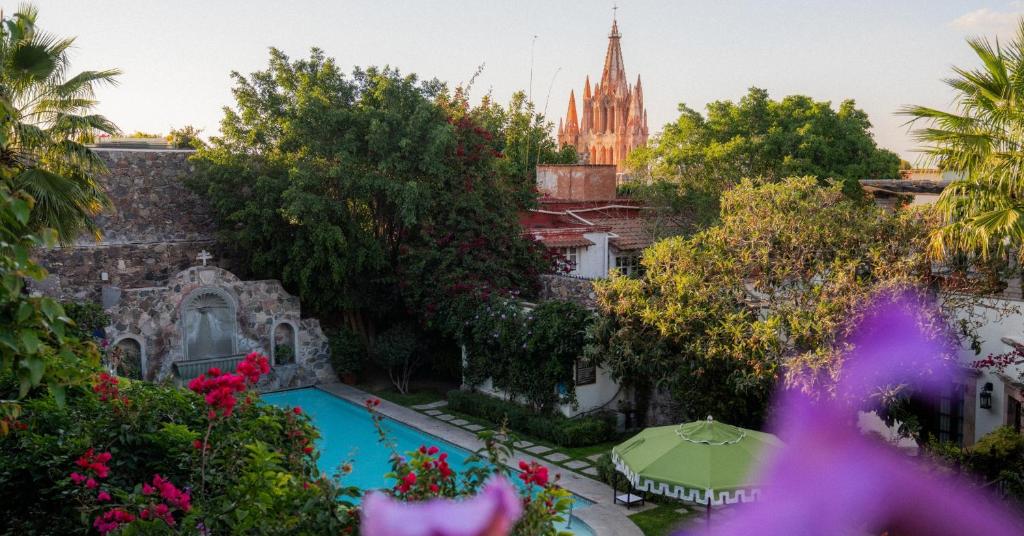
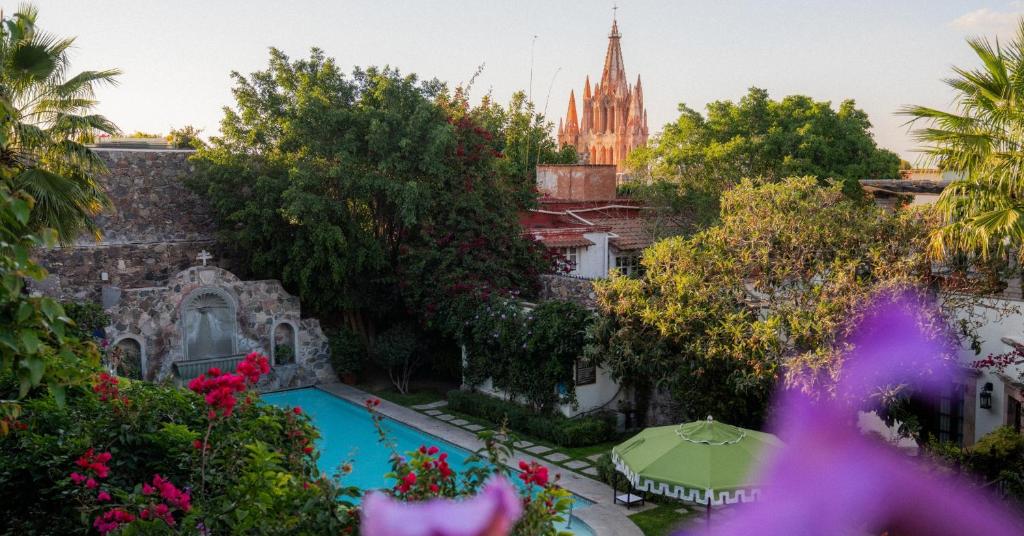
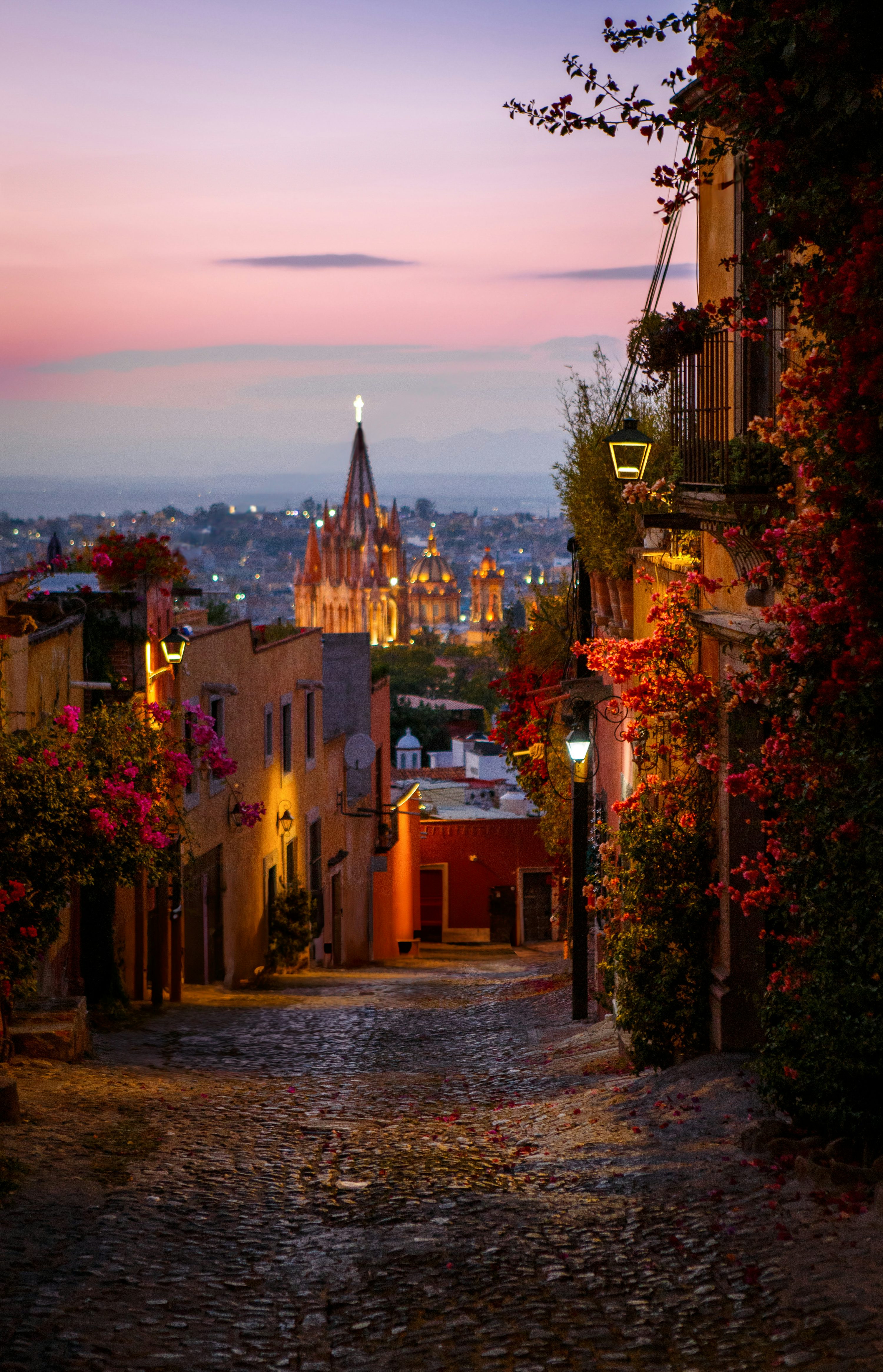
San Miguel de Allende is the most visually coherent colonial city in the Americas — a UNESCO World Heritage Site where the entire historic centre has been preserved in its 17th and 18th-century form, with no high-rises, no billboards, and no visual interruption to the rose-pink stone facades and cobblestone streets that have made it one of the most photographed cities in Mexico. The Parroquia de San Miguel Arcángel, with its neo-Gothic spires rising above the central jardín, is one of the most recognisable silhouettes in Latin America.
The hotel landscape reflects the city's character: intimate boutique properties occupying colonial mansions, haciendas, and former convents, with rooftop terraces that look out over the terracotta rooftops toward the surrounding hills. Rosewood San Miguel de Allende and Belmond Casa de Sierra Nevada are the two defining addresses — both occupy historic buildings in the centro histórico, both deliver international luxury standards within genuinely historic architecture, and both have restaurants that rank among the best in Mexico.
San Miguel has evolved into one of Mexico's most sophisticated cultural destinations, with a year-round calendar of art festivals, jazz concerts, and culinary events that draw visitors from across North America and Europe. The city has a significant expatriate community — American and Canadian — that has raised the standard of restaurants, galleries, and design shops to a level unusual for a city of its size. The weekly artisan market at Parque Juárez is one of the best in Mexico.
The city sits at 1,900 metres in the Bajío highlands of Guanajuato state, giving it a mild, spring-like climate year-round. Temperatures rarely exceed 28°C or fall below 5°C at night, making it one of the most comfortable year-round destinations in Mexico. The surrounding region — the wine country of Guanajuato, the silver-mining city of Guanajuato itself, and the hot springs of Atotonilco — adds considerable depth to any stay of more than three days.
Semana Santa (Holy Week, March–April) and the Festival Internacional de Jazz y Blues (November) are San Miguel's two peak cultural events — the city fills completely and hotel rates double. Both are worth experiencing, but book six months in advance. The quietest and most atmospheric period is January and February, when the Christmas crowds have left and the weather is at its most pleasant.
The rooftop terrace at Rosewood San Miguel de Allende offers the best view of the Parroquia spires in the city — particularly at sunset, when the stone turns from pink to gold. Non-guests can access the rooftop bar; it is worth the visit even without a room reservation.
Belmond Casa de Sierra Nevada's cooking school is one of the best hotel culinary programmes in Mexico — a half-day class that covers traditional Bajío cuisine, followed by lunch in the garden. Book in advance; classes fill quickly.
The hot springs at La Gruta, 15 minutes from the centro by taxi, are the best in the region — natural thermal pools in a cave setting, open from 8am. Arrive early on weekdays; the pools become crowded on weekends.
San Miguel's highland climate is mild year-round. March to April (Semana Santa) and November to December (Christmas festivals) are the most festive and most crowded periods. July and August bring afternoon thunderstorms. January and February offer the best combination of pleasant weather, manageable crowds, and lower hotel rates.
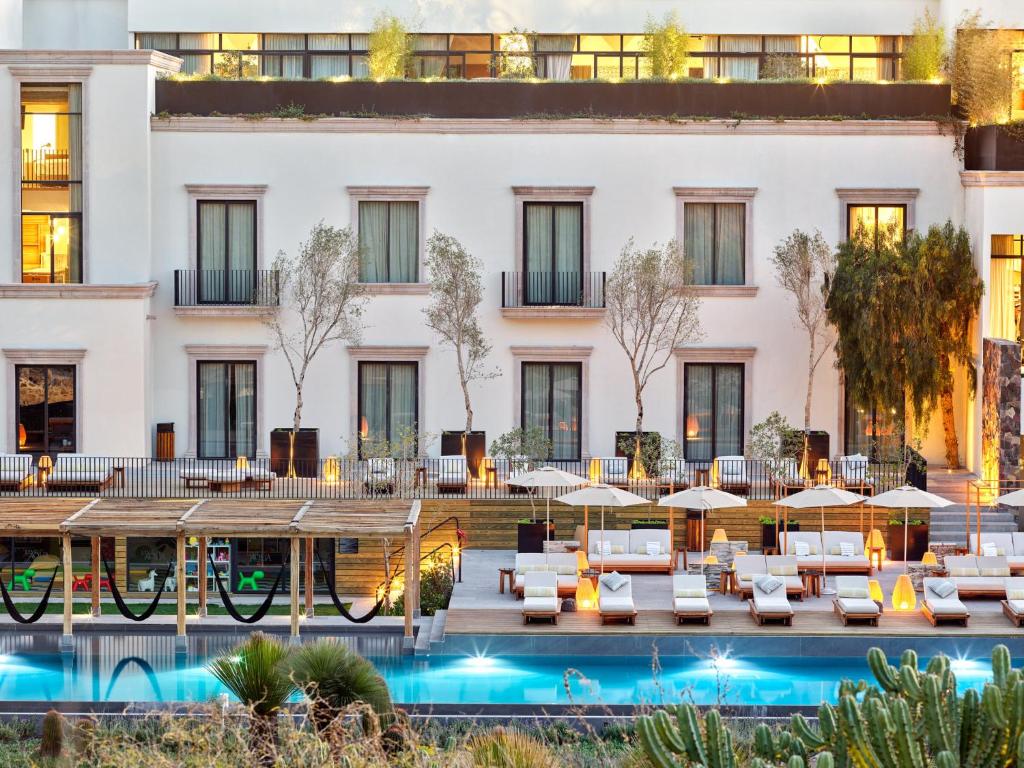
For the most complete luxury experience in the centro histórico — with the best restaurant, the best rooftop view of the Parroquia, and the most polished service — Rosewood San Miguel de Allende is the definitive choice. The property occupies a restored 18th-century estate and sets the standard for the city.
For a more intimate and characterful experience within the historic centre, Belmond Casa de Sierra Nevada — a collection of colonial mansions connected by courtyards and gardens — offers a quieter, more residential feel. The cooking school and the garden restaurant are among the best in the city.
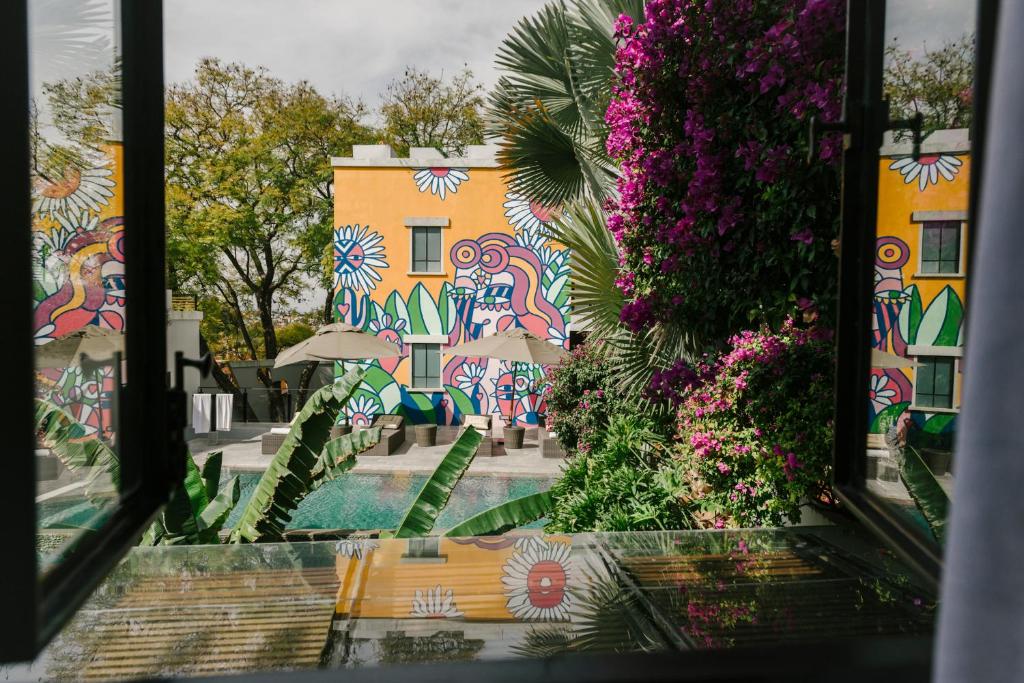
For travellers who want a boutique property with strong design credentials and a more local atmosphere, Hotel Matilda is the best independent option — a contemporary art hotel with a serious restaurant and a rooftop pool, positioned as the design-forward alternative to the heritage properties.
For travellers combining San Miguel with the wider Bajío region — Guanajuato city, the wine country, the hot springs — a car is essential. San Miguel itself is best explored on foot; the centro histórico is compact and most of the best restaurants, galleries, and shops are within a 15-minute walk of the jardín.